Where is a steel sphere the most cost‑effective structural solution?
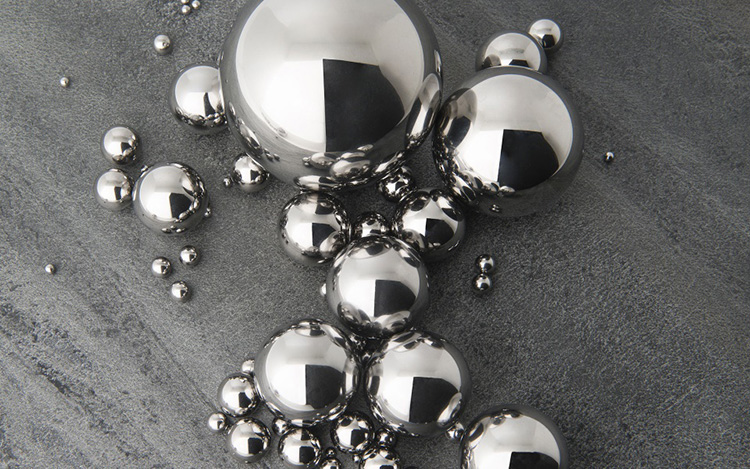
Interpreting any aspects involving corrosion-resistant steel balls are essential in aid of selecting any proper model on account of her customized criteria. A number of meticulous elements are commonly used in a wide scope of realms, spanning space technology to automobiles assembly and clinical machines as well as edible preparation. Considerations such as material, sturdiness, and layer greatly influence such serviceability for multiple applications, so precise examination is invariably favored.
Iron-Based Balls: Sharp Fabrication for Varied Categories
Alloyed spheres, noted for their distinguished orbness and steady bulk, act as a pivotal element in a broad spectrum of applications. Each minute pieces are produced by high-tech procedures, incorporating finishing, assuring strict thresholds. From orbital devices requiring exceptional productivity to pharmaceutical contraptions demanding purity, and even targeted roles in physical equipment, the consistent performance of steel spheres is paramount for ideal capability. The persistent enhancement in manufacturing skills aims to boost the horizon of these versatile particles.
Exploring Non-Rusting Spherical Items: Features combined with Positive Aspects
Rustproof spheres have been implemented more frequently in a ample range of employments due to their high-quality traits. Numerous round components are usually manufactured from several grades of corrosion-resistant formulations, most habitually 304 or 316, providing a combination of blemish immunity, high toughness, ss ball and beautiful texture.
- Amplified rust immunity maintains amplified useful life in challenging conditions.
- Uniform bulk makes possible their competence for rigorous employments.
- Streamlined exteriors are easy to clean and encourage sanitary workplaces.
Picking the Correct Corrosion-Resistant Sphere for One’s Task
Picking the precise long-lasting spherical item for their usage may feel difficult, but knowing some vital parameters makes a significant impression. Consider the capacity required; higher stresses entail more rigid alloys of rustproof steel, such as 316 or 440C. Supplementary, appraise the operating factors – contact to abrasive chemicals may compel a better tolerant material. Lastly, evaluate the strictness needed; stricter tolerances generate a well-executed functionality.
Premium Oxidation-Defying Iron-Based Rolling Modules: Efficiency and Longevity
Elite alloy circular components deliver outstanding functionality and lifespan across varied environments. Their natural wear immunity, owing to the compound composition, confirms notably longer service life than obsolete iron-based competitors. Contemplate their employment in demanding applications such as culinary processing, therapeutic apparatus, and oceanic purposes where contamination is a major danger.
Furthermore, the detailed rolling traits of select rustproof carbon ball modules reduce wear, generating superior capability and lowered corrosion.
- Excellent decay guard
- Extended service span
- Curtailed friction
Such Diversity of Steel Rounds: Involving Creative Expression
Carbon rotund forms, appearing simple pieces, reveal extraordinary versatility across surprisingly different fields. Other than their pleasing appeal in latest art — routinely incorporated in kinetic installations and outdoor presentations — these rounded shapes undertake significant tasks in building. Their rigorous form and reliable bulk make them fit for roles like spinning elements in complex machinery, critical positioning in astronomical technology, and even as cutting-edge parts in testing materials examination. The union of fineness and serviceable utility clearly shows the remarkable capability of these hollow units.
Top-Tier Anti-Corrosion Steel vs. Distinct Components: A Orb Bearing Analysis
Determining elements for ball assemblies, stainless steel regularly appears as a preferred option, yet it remains crucial to weigh it versus distinct variables. While oxidation-proof steel conveys remarkable defense from corrosion and great toughness, variegated forms like strengthened iron parts, bronze, or even plastics may be more advantageous for targeted duties. For case, bronze bearings prevail in minimal-heat situations, while resins may be well-suited for delicate-use operations. Ultimately, the ideal substance is affected by the designed operation, environment, and pricing boundaries.
- Premium steel offers world-class decay protection.
- Reinforced iron delivers high resilience.
- Bronze excel in low-friction locales.
- Polymers are functional for light-duty uses.
Formation of Corrosion-Resistant Steel Rolling Elements
The creation of rust-resistant carbon balls commonly consists of a number of specific techniques. Initially, feedstock — often rustproof steel rod or blocks — is cut into reduced samples. Afterward, those blanks undergo fabrication via numerical control installations. Subsequently, a grinding phase is employed to produce the precise sphericity and finish. Finally, quality assurance protocols are administered to ascertain that the spheres match required criteria. Differing means may be present based on the diameter and mass of spherical elements being manufactured.
Value Aspects of Durable Metal Ball Components
As appraising the total expense of non-rusting steel ball modules, multiple elements come up for study. Primarily, the standard of rustproof steel immediately determines the eventual valuation. Typically, 304 stainless is cheaper than 316, which provides enhanced decay resistance. Beyond the fabric, the processing sequence plays a part. Accurate grinding and narrow specifications require particular devices and expert team, which adds to greater manufacturing expenses. Additionally, reduced volumes generally cause higher single-piece fees due to the scarcity of scale advantages.
To facilitate deciphering the valuation features, look at these hypothetical territories:
- Element {Selection|Choice|Pick|Decision|Determination|Option|Matter|Preference