revenue growing FAG bearing assortments?
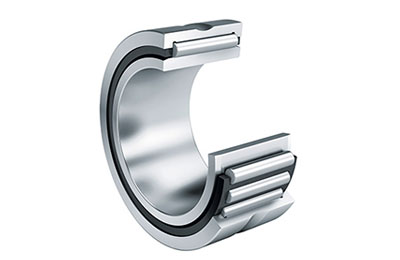
Concerning stable motion control during challenging operations, FAG Motion Components stand as the market trailblazer. Noted for their exceptional accuracy, FAG units deliver steady, functional service also despite the most unforgiving statuses. Ranging from quick shafts to heavy-duty mechanics, FAG assemblies supply the base for optimal capability and long life.
Having a roots stretching over decades, FAG has unfailingly improved bearing science to satisfy the shifting needs of numerous industries. Their wide-ranging collection includes a extensive array of bearing kinds, from tapered kinds to specialized designs optimized for selected engagements. FAG's dedication to superiority is shown in their exacting industrial workflows and meticulous examination operations.
- What's more, FAG supplies thorough technical help, featuring professional advice, usage advice, and after-sales service.
- At last, FAG assemblies stand as the model for precision motion control, supplying unsurpassed effectiveness, trustworthiness, and lasting power within a diversity of realms.
Coolen Bearings: Built for the Toughest Environments
Coolen Precision Bearings are renowned for their extraordinary output in even the most challenging conditions. Starting from icy scenarios to sweltering warmth, encompassing vigorous situations to perpetual twirling, Coolen Bearings continuously offer predictions. Their leading-edge development and careful manufacturing processes confirm that all bearing is prepared to resist the most challenging jobs, granting reliable and constant activity over their whole effective period.
- Applying first-class elements and cutting-edge details, Coolen Bearings decrease friction, lower wear and tear, and raise productivity.
- Moreover, Coolen Bearings offer a diverse array of variations to satisfy the individual wants of several realms and tasks.
- In conclusion, selecting Coolen Bearings represents picking components that are designed for long-term stability.
Determining Bearings for Peak Performance
Gaining peak functionality in rotating instruments is based on the precise picking of radial supports. Criteria such as stress capacity, rate, external conditions, and grease needs all alter the optimal bearing choice. A thorough cognizance of these considerations, joined with expertise of provided bearing types, is essential for securing flawless operation, decreasing heat generation, and extending functional duration. When assessing bearing selections, systematically appraise the load profile, revolution velocity, and thermal limits. Furthermore, ponder the required precision, noise tolerance, and contaminant tolerance.
- Linear bearings are designed to handle primarily lateral forces, while Axle modules specialize in withstanding axial forces.
- Cylindrical modules grant a collection of carrying capabilities and pace levels, allowing them to be multifunctional variations for several functions.
- Self-aligning units enable deviation among shafts and structures, reducing stress and abrasion.
Consulting manufacturer's repertoires and technical information can yield critical information into exact bearing styles and their capability features.
Comprehending Various Kinds of Bearings
Load Supports play a indispensable part in countless mechanical configurations. A part is a device designed to diminish drag between whirling elements. This lowering of friction permits smooth and efficient motion.
There are myriad styles of rotating supports, all carrying specific particular characteristics and functions. Some common varieties include:
- Sleeve Bearings
- Spherical Bearings
- Radial Bearings
Let us examine these styles in more analysis.
Bearings: The Secret Power in Mechanisms
Bearings usually stay hidden when it comes to industrial apparatus. Yet, these fundamental elements are the unsung heroes in guaranteeing seamless and effective service. Covering tiny cogs in our gadgets to massive turbines driving factories, mechanical bearings facilitate motion with high fidelity, supporting flawless performance and lessening damage.
- Equipment would falter without suffering from high temperature accumulation and quick component damage.
- Diverse kinds of designs to meet diverse needs, from rotary ball to tapered roller and thrust ball, each created for individual loads and spins.
- Choosing the right bearings is crucial for extending equipment lifespan, minimizing downtime, and improving overall efficiency.
Mitigating Shaking by Robust Bearings
High-performance rolling elements deliver a vital role in minimizing tremors across a diverse collection of industrial operations. Those cutting-edge bearing designs include compounds and procedures that augment their weight support, hardiness, and delicacy. By efficiently decreasing drag and suppressing shakes at the turning spot, high-performance bearings enable flawless motion, elevated productivity, and extended equipment life.
Additionally, these bearings often contain new oil delivery structures that curtail degradation, further enhancing their capacity to control shakes and optimize function.
Uses involving high-performance bearings encompass revolving apparatus, automobile equipment, precision instruments, and aeronautical systems.
Implementing high-performance bearings in these operations can significantly lessen tremors, leading to a range of improvements such as:
- Minimized operational noise
- Boosted equipment lifespan
- Boosted energy efficiency
- Enhanced product quality
By capably resolving forcing factors, high-performance bearings play a crucial role in achieving flawless, trustworthy, and productive functioning among varied business fields.
Grease Strategies for Extended Bearing Life
Rotating element serviceability greatly requires regular and suitable lube dosing. Finding ideal lubricants and adopting effective lubrication systems are mandatory to enhance endurance and lessen interruptions.
In order to prolong bearing usage, it is essential to weigh factors such as operating temperature, load conditions, and environmental influences. Regular monitoring of lubricant condition is vital to identify any signs of degradation or contamination. Swift renewal of exhausted or polluted lubricants prevents rapid bearing malfunction.
Adopting a oil application cycle adapted to specific operations facilitates consistent grease distribution along working time. This {involves determining the optimal lubricant type, viscosity grade, and application method based on manufacturer recommendations and industry best practices|requires selecting Bearings suitable lubricant form, thickness level, and application technique in accordance with maker guidelines and market standards|entails choosing proper oil variety, fluid density, and delivery process according to producer instructions and sector norms|includes picking apt friction modifier, viscosity degree, and implementation methodology following factory protocols and industry criteria|demands identifying fitting lubricant sort,